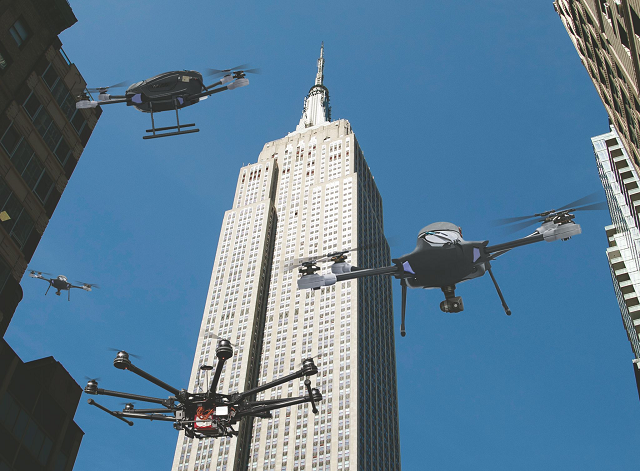
No doubt, drones have a lot of negative consequences. They infringe on people’s privacy, and pose other security concerns, especially when not mounted with a drone GPS tracker. But the several calls for the restraining of the unmanned aerial vehicles (UAVs) in New York City are going too far. These calls fail to recognize the variety of benefits that drones can be put, ranging from emergency situations to industrial applications. Hence, this results in a drone debate.
Scroll down for video
Drone Debate For or Against Drones?
In time of emergencies, drones can provide vital information, thereby helping them assess risk during events such as train derailments, floods, fires, and hurricanes.
For instance, if there were drones during Hurricane Sandy, first responders could have used real-time video to evaluate flooding and fires and possibly even had drones deliver water and medical supplies to people at a breezy time.
It has been seen that the pictures drones often send back are clear, precise, and in some cases breathtakingly beautiful. These qualities make drones invaluable for engineering and construction applications as well. They can be used in dangerous situations like the inspection of bridges, roads, buildings, cellphone towers, and roofs. Helicopters are far more expensive and less nimble compared to drones.
In places like New York City, drones are being flown close to the ground—which is legal anyway—to inspect cleanup efforts in Coney Island Creek, Flushing Bay, and the Gowanus Canal, as well as to keep an eye on the Long Island and Staten Island coastlines.
Despite the fact that Federal Aviation Administration (FAA) is pondering on new rules for drones, it does not allow them to fly within five nautical miles of an airport, a no-fly zone that covers most of New York City. Just as Crain’s has reported, the mayor’s office is yet to issue a single drone permit for filming in public property.
Although some users might abuse the usage of drone, it’s not enough to call for a drastic limitation on the places and ways that UAVs can be used in New York City or even banning them outright. The government should allow licensed professionals to safely operate drones in a manner that benefits society and enhances safety. This is why steps to intelligently regulate UAVs and support mandatory training and registration, at point-of-sale or otherwise, are readily welcome.
Dronethusiast
Of course, it is obvious that many people see drone as a stealth weapons that rain death in war or allow neighbors to spy on us. Thus, the idea that a company such as Amazon.com or Domino’s could bring them to New York City for jobs as banal as pizza delivery is, at best, is a joke begging for a punch line. This is a normal experience with most fast-advancing technologies, and drones are not exceptions. Many people are imagining all sorts of sinister uses. But drone use for emergency and industrial applications enhances safety and provides cost-saving benefits.
The bottom line after all this drone debate is that while drones for many people may create darkly comic images of skies filled with hundreds of pizza-delivery vehicles, it could actually do offer better services.
Despite the dangers of UAVs, severely limiting its usage is not the answer in New York City. It’s more advantageous to give drones the opportunities to advance engineering and infrastructure projects and to be lifesavers when needed. They can serve pizza, but they can also serve the public good as well.
Drones have been an intriguing technology for Customs and Border Protection (CBP) as they are easy to use. They can be controlled with a smartphone and have the potential to broadly expand the aerial surveillance capabilities of CBP at a relatively low cost. However, there’s a downside—they are putting the lives of CBP agents in danger. Ergo, the creation of drone detection is recommended.
“Several weeks ago, an Air and Marine helicopter working in the Rio Grande Valley carrying a pilot and a border patrol agent had a near miss of a small unmanned aircraft system (UAS),” director of Southwest Region of CBP’s Air and Marine Operations, Lothar Eckardt, said. “We almost lost the helicopter, the pilot, and the border patrol agent, okay? That’s what keeps me up at night.”
Creation of Drone Detection at Silicon Valley
Eckardt, one of several CBP agents, speaks to crowds of entrepreneurs in Menlo Park, California. This is a part of the Department of Homeland Security’s new Silicon Valley Innovation Program, an initiative that aims to work with startups and leverage their cutting-edge technology.
DHS in December held its first startup day. It focused mainly on Internet of Things technology; but on April 29, the department shifted its focus on CBP and the many issues it aims to find solutions to.
Drones are one of the devices CBP is most interested in. The flying robots have grown popular over the past couple of years, partly due to increasingly affordable pricing—the best-selling drone on Amazon costs just $44. These aircraft come in different shapes and sizes, and no matter what their configuration is, they all are capable of zooming through the sky.
Scroll down for video
World Aviation ATO
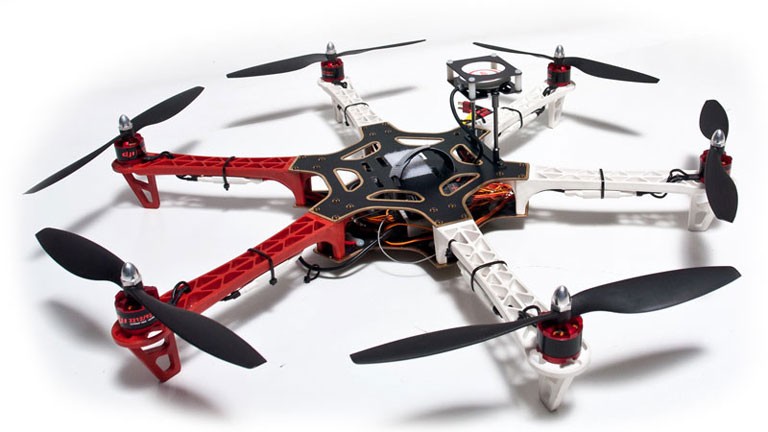
Although drone operators are only allowed to fly their gizmos up to 400 ft in the air, many of the devices can fly much higher than that. For instance, the DJI F550 can reach heights of almost three times that limit. This fact is both a good thing and a bad thing, according to CBP. Ergo, the creation of drone detection systems would be advantageous.
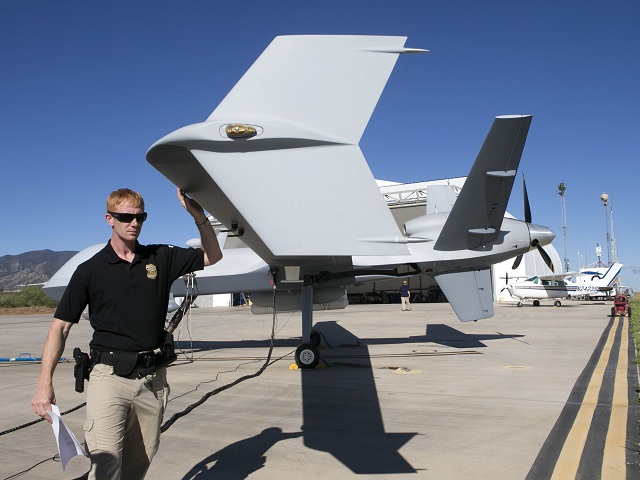
According to several DHS and CBP officials, drones are “a way to force multiply” CBP’s aerial fleet in such a way that it doesn’t cost taxpayers much money, either in fuel or equipment costs. CBP has several full-size Predator drones just like the ones the Air Force uses in the Middle East. These drones are, however, seen as huge, expensive gadgets that require extensive training to control. Hand-launched drones, also known as small UAS, on the other hand, are easier and cheaper to fly, presenting CBP with many possibilities.
“What we’re attempting to do is settle on a list of requirements for the [small] UAS,” said Ronald Vitiello, acting chief of the U.S. Border Patrol. “Some things that we’ve witnessed the military use on the battlefield that we think have application to do better information and situational awareness for agents.”
CBP, apart from figuring out how it can use drones, is also looking in Silicon Valley for countermeasures for this technology. There have been instances where people have tried using drones to smuggle drugs across the border, according to Vitiello. “You have to be able to identify [drones], detect them, and then have an operational response for interdiction,” he said. This is one of the main reasons why creation of drone detection is essential.
azcentral
CBP says it wants the creation of drone detection system that will be able to help its pilots detect drones whenever they take flight. In line with this, a GPS tracker for managing drones’ flights would also be handy.
“What I would like to see Silicon Valley helping us with is how do I separate the small UAS from a manned aircraft so we don’t collide in the airspace?” Eckardt said. He also noted that CBP helicopters operate mainly at 500 ft and below, while drones are too small to carry any transponders or beacons to be detected.
“Nobody can see these things. It’s not a matter if. It’s a matter of when they’re going to collide,” Eckardt said. “I’d hate to be the one to lose somebody.”
On Wednesday, March 23, 2016, a bill regulating the use of drones in New Hampshire was passed by the New Hampshire House by a vote of 251-114.
The bill called HB 602 is divided into two sections: regulations on use of drones by the public for private or commercial reasons and regulations and restrictions of use of drones by government and law enforcement.
Senate is yet to clear the bill and it hasn’t been signed by the governor.
“I don’t see problems with complying with these new regulations,” said Rick Spitz, owner of SI Drones, one of a handful of commercially licensed drone operators in the state.
“Our business policy already follows strict FAA rules and we always obtain the prior consent of any property owners we are doing business with or for,” Spitz added. “Hopefully these regulations will help make the public more comfortable with new drone technology, knowing that safeguards are in place.”
Scroll down for video
Unsplash
New Hampshire House Pass Bill Regulating Drones
Spitz said New Hampshire has a strong tradition of respect for personal privacy and liberty and that the proposed regulations align with these values, especially as they pertain to use of drones by police and government agencies.
“With respect to use of drones by ordinary people and companies, again personal privacy is protected in these regulations,” he said. The rules prohibit aerial surveillance and “recognizable” photography of people.
The rules are consistent with existing FAA regulations and they do not undermine the FAA rules in any way. They ban drones from carrying weapons, they restrict operation near airports, and they regulate operation near critical infrastructure.
The bill demands that drones should be tagged with basic identification. The FAA requires that all drones weighing more than 0.5 pounds must be registered on the FAA Web site dedicated to drone registration and all drone owners must obtain an FAA number, which should always be fixed to the drone. The bill states that no drone must fly at a height lower than 250 feet without permission.
“I interpret this to mean that drones may overfly private property in New Hampshire if they are at least 250 feet above ground level but under the 400-foot FAA altitude limit for drones,” said Spitz. “This would be needed to allow for a future in which companies like Amazon could provide delivery services when future FAA regulations permit.”
Sponsor of the bill, Rep. Neal Kurk, R-Weare, said it balances the protection of privacy with the concerns of private drone manufacturers and “the many wonderful uses that drones can bring us.”
“The bill protects us from some of the bad things that drones can do but allows the industry to flourish,” he said, noting that in “some countries,” drones are used to deliver pizza.
PBS NEWSHOUR
Explaining the bill, Kurk said, “If the police and law enforcement are going to use a drone to track a suspect or as part of an investigation, they have to get a warrant.” Kurk said. “But if the University of New Hampshire wants to fly a drone around to take pictures of moose, this bill has nothing to do with that.
“The private sector—individuals and businesses—can use drones any way we want,” Kurk said. “But we can’t follow and track people as there are recognizable faces or stalking or harassing or on the inside of buildings where people have a reasonable expectation of privacy.”
Initially, drones were crash-landing on the lawns of the White House. It was in December that a shocking study revealed that there were 241 close encounters between manned aircraft and drones in two years.
It was reported that the drones big expert and likely its principal user, the U.S. military, is now being terrorized by the remote-control divisions.
Drones Threatening Military Jets by this Reports of Drone Interference
A fear-provoking report in The Washington Post interference detailed that several military operations have suffered in the hands of toy drones. The Armed Forces or the Federal Aviation Administration reported that on 35 occasions, small drones had come unpleasantly closely to the airfields or military aircraft.
Scroll down for video
Among the public disturbance of drones was a near-collision, which involved an Air Force fighter jet last month over the Grand Bay Bombing Range in Georgia, in which a drone flew over residential district located on the outskirt of Philadelphia closely to the refueling tanker of an Air Force and caused an evasive action being taken by the plane.
The FAA’s new registration policy mandatory is already effective, with details that include the following:
The regulations stated that any toy drones owners that weigh more than half a pound must register their aircraft with the government and label it with a serial number. The FAA requires the recreational drone’s operators to fly their machines no higher than 400 feet and must be kept away from the airports at distance of at least 5 miles.
Reports have shown that difficulties encountered in regulating the use of the little machines called drone are very alarming. More Americans have been drawn to the hobby of drones, hence the decrease in its prices. There are high indications that many more drones would be given at Christmas. An official of FAA earlier this year predicted that Americans would purchase a million new drones in 2015.
Drone registration alone will not be enough for safety delivery in the skies. Because no one supports a mid-air disaster to arouse action, it’s high time for federal regulators, commercial aviation, and the military to collaborate with the drone industry on means to keep little fliers from being a threat to jets and planes in the skies.
Apart from the registration of drones of various sizes, the FAA must make sure that the drone operators follow and abide by the rules and regulations laid down by the government. Anyone found violating the rules must be severely sanctioned accordingly.
Quarterly seminars should be organized by the federal regulators for drone manufacturers, individuals, and the commercial drone operators to create awareness and also warn them of the dangers their machines pose to the aviation industry and the populace in general.
The drone big users, manufacturers, and all stakeholders in the industry must be monitored by the FAA and all other government agencies. A law must be passed by the federal legislation to guide the use of drones and also to identify some selected areas where drones would be used.
To this end, military must also be used to enforce the law where and when necessary. The FAA and other government agencies involved will play a major role to make sure the law is strictly followed and adhered to by both the manufacturers and individual user respectively. Any individual or commercial drone operators that go contrary will lose his machine and will be prosecuted in the law court.
Seattle’s Great Wheel can now be added to the list of places where drones have smashed, bashed, and crashed into. It is not a good experience, though, but more care needs to be taken to avoid such occurrence in future.
According to Engadget, quoting a Seattle’s KIRO TV report, it says an unknown person flew a drone close to the big Ferris wheel and it collided with massive metal structure and crashed immediately to the ground.
The KITO TV reported that the attraction, which is a building-size revolving wheel beautifully surrounded with spotlights, did not suffer any damage. Regrettably, a table made of plastic below the Great Wheel was badly affected, it suffered irreparable damages.
Scroll down for video
Drone Visual
The device, a DJI Phantom 3, which costs about $1,300, is being held by the police while they were still searching for the pilot that caused the drone crash in Seattle. The pilot will be charged for damages if later found by the police.
Drone Crash in Seattle and US Area
The rapid increase in drone’s consumers has provided detailed information with visuals of location previously visible to planes or helicopters. This has also led to the revelation of a quite large number of drone crash in Seattle, thus raising questions about privacy expectations.
Another drone piloted by a New York City teacher earlier this summer also crashed into the stands at the US Open. In a resemblance incident, University of Kentucky student also crashed his drone into the football’s stadium of the school. The two pilots have been charged with endangerment, as reported by The New York Times.
In March, over Manhattan’s Upper West Side, a drone fell from the sky and narrowly misses a delivery bike rider. Police had recorded cases of drones flying too closely to their helicopters, and prisons have also said they have seen drones from outsider flying contraband to inmates over the walls.
There was a drone user who shows his strong liking of his drone and attached a handgun to it when flying the device.
As a result of these public disturbances, a task force to create a national registry has been established by the government for drone owners to assist in reducing accidents, and find pilots involved in any accidents. If any eventuality happens, the information of the registered drone owner could be used to trace the owner of such device for proper prosecution.
To avert future occurrence of drone crash in Seattle and the rest of the United States, the owners should be familiar with rules concerning drone flying. These users should be advised and informed accordingly by the law enforcement and government agencies to keep their drones away from heavily populated areas where they could cause injury or damages. Furthermore, the government should device a means apart from drone owners’ registration scheme so as to track a flying drone in case of any eventuality or accidents.
Drone DP
The federal legislation should pass a bill that will take care of drone flying related offenses in order to protect the lives and properties of the U.S. citizens. A flying limit, operation rules and regulations should be set for both individual and commercial operators of drones. The bill if finally passed into law would curb the menace caused by drone crash in Seattle and the rest of the United States.
The information in the bill should include drone monitoring, training of drone pilot, operations procedures of drone and keeping of drone’s data to a centralized database for easy accessibility.
All drone users should note and keep this slogan that says “Try to avoid the Ferris wheels.”
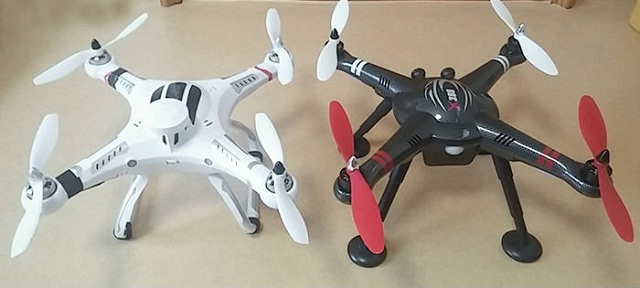
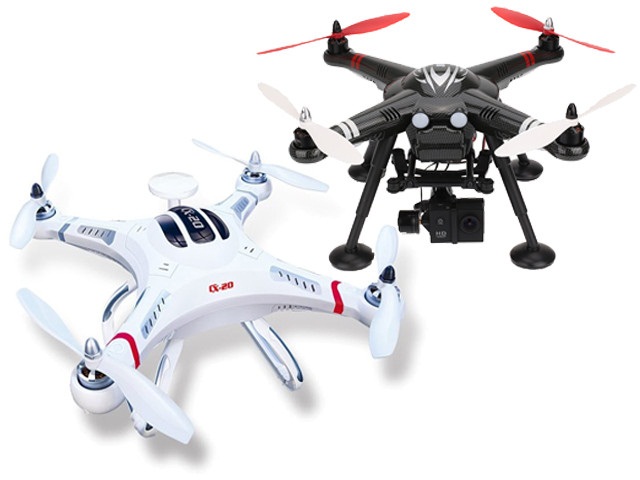
Are you debating as to whether to get a Cheerson CX-20 or a XK Detect X380? Then this article has you covered. If you start comparing Cheerson vs XK Detect, you will know that each drone has its own set of advantages and disadvantages, but one thing is for sure—they are both suitable for intermediate pilots.
In comparing Cheerson and XK Detect, the first thing you need to take note of is that both drones are not immune to crash-landing or those dreaded flyaway situations. With that piece of information, drone owners without any prior experience may not find these models the easiest to work with.
Scroll down for videos
Drone Arena
Cheerson CX-20
Comparing Cheerson and XK Detect, the former is undeniably the more popular brand among the two drone models. One of its most popular manufactured drones happens to be the Cheerson CX-10, which is known to be the world’s smallest drone, too small it can fit in the palm of your hand.
The company eventually stepped up their game by introducing more models to choose from. Perhaps the most attractive factor about Cheerson’s commercial drones is that they come at a relatively low price and have roughly the same feature as the DJI Phantom.
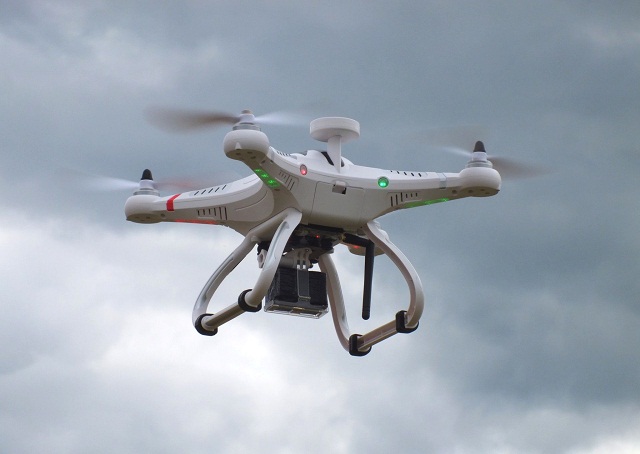
As for the CX-20, it is yet another affordable option courtesy of Cheerson. Aside from being pitched as a cheap option to get into the world of UAV, it also has the right features that can handle the user’s GoPro and action camera.
Gadget Flow
Other notable features include the following:
15-minute flight time
2700 mAh 20C 3C battery (the battery charges for about 2 hours)
200-meter altitude and control distance
22 mph max flight speed
Return to Home function
GoPro camera compatible
Intelligent orientation control—this means you don’t have to worry about losing control of your CX-20 with the IOC. It is tasked to propel the drone toward the direction you wish to go to. This makes it easy to recover from a spin and set the CX-20 straight again.
Altitude hold/fixed position hover/auto landing fail-safe
LED light system
The CX-20 comes in two versions: the Big Fly Shark version and the open source version. The primary difference between the two is that the open source version supports the mission planner software, while the Big Shark version does not.
This brings us to the price point. The CX-20’s more popular open source version is priced at $207. The Big Fly Shark usually retails at $25 more.
XK Detect X380
Drone Central
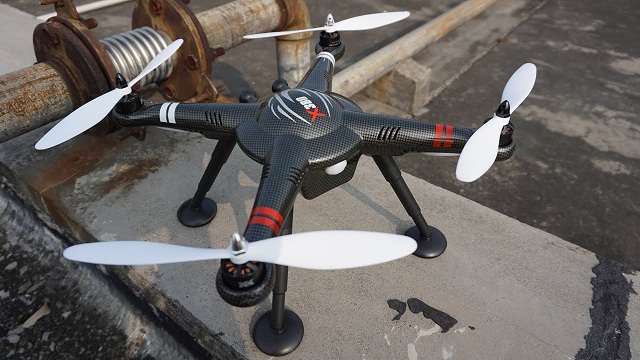
XK is not a popular drone manufacturing company, but it can be noted as the sister company of WLtoys, the manufacturer behind the WLtoys V303. That said, the X380 is clearly a more polished version of the V303. Comparing Cheerson and XK Detect appearance-wise, the two drones share a striking resemblance with each other. Both exteriors are fashioned with a new faux carbon fiber finishing and a larger battery bay. The X380 even has the same x-shaped body and UFO-like design.
Comparing Cheerson and XK Detect, the main difference between the two is that the X380 has more impressive features, making it even more worthy to be pitted against the CX-20. Basically, there isn’t much of a difference between the XK Detect X380 and the CX-20. They share features like GPS support, return-to-home commands, and GoPro compatibility.
The X380 has a bigger battery in the form of a 11.1V 5400 mAh battery, which provides a flight time of almost 30 minutes. That feature alone is enough to give it an edge over the CX-20.
Comparing Cheerson vs XK Detect: Price Tag
The costs for the CX-20 and X380 are the same. Both drones retail at a price point of $207, and that would be excellent for people who are new to the UAV world. Before purchasing a coveted DJI Phantom, you might want to buy either one of these.
Conclusion
BEST QUADCOPTER
With similar features, comparing Cheerson and XK Detect boils down to personal decision. If you want something that has been popular among the public, then go for the CX-2o. This does not mean that you should rule out the X380, though, as this model is not as widely distributed because it came out later. The features of X380 are not something that can be easily overlooked as well. With its long-lasting battery life, users can fly their drones for longer periods.
If you happen to already be a drone owner, but you still want to enhance your drone’s features, then a GPS tracking device will be a good way to start. Trackimo is a 3G GPS tracking device that allows drone owners to keep track of their precious drone, and it increases recovery time in case a flyaway happens.
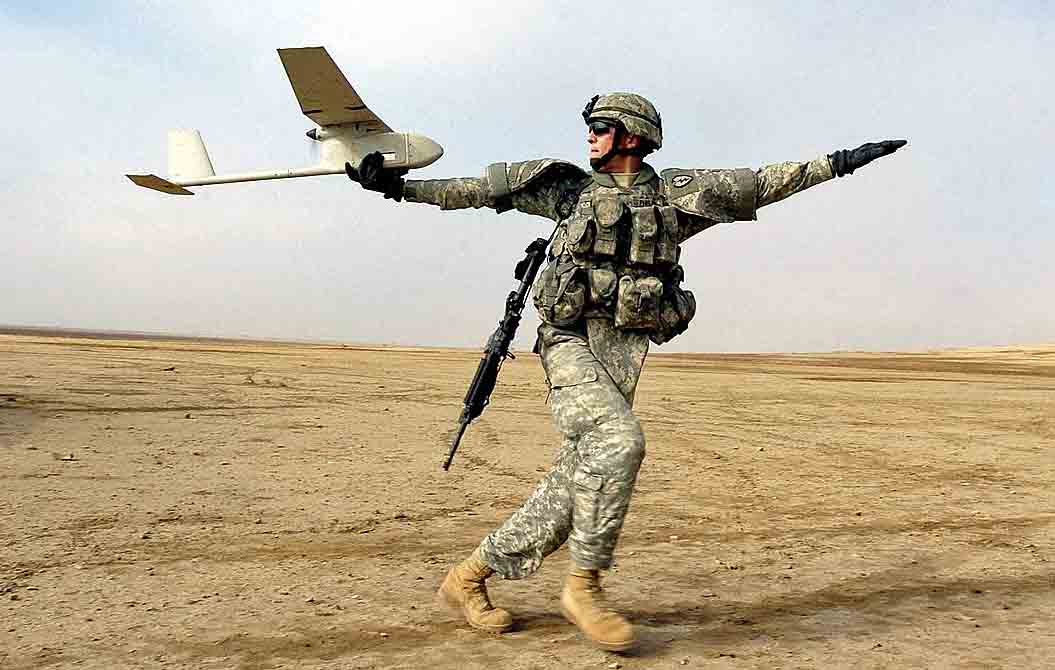
A drone recently crash-landed in a Colorado Springs neighborhood in May by some Fort Carson Soldiers. Investigations, however, revealed that these soldiers did not have proper clearance to fly the small RQ-11 Raven aircraft. They also didn’t inform key leaders at the post that they had lost the drone. As a result of these discoveries, the soldiers will undergo remedial training.
The 64-page investigation report about the May 12 incident was released by the army to the Gazette under a Freedom of Information Act request. The report shows that the 4-pound drone was flown by the post’s military police in unauthorized airspace despite the growing tension over Islamic State group threats that led to increased security at military bases nationwide.
Scroll down for video
Fire Aviation
Drone Crash in Colorado Springs
“Negligence in two areas contributed to the ultimate outcome,” Army investigators wrote. “Neither item appears to have contributed to the loss of control but impacted the mission management and public affairs office response to the loss of control.”
It is unknown what brought about the crashing of the drone in the yard of a home off Uintah Street in downtown Colorado Springs, 12 miles north of Fort Carson. The aircraft has a stated range of 6 miles. Investigators and experts, however, think a battery or computer problem might have contributed to the crash of the plane.
Contrary to the statements given by Ford Carson in May, investigations have revealed that flying the drone was a violation of Army regulations and Federal Aviation Administration rules concerning the use of unmanned aircraft over American lands.
Dani Johnson, Fort Carson spokeswoman, said that leaders thought they were obeying all regulations, but the violations were later found out.
Investigations also revealed that stickers weren’t put on the unmanned planes belonging to Fort Carson to identify them as properties of the Army. It was also announced that those who find lost or crashed aircraft should return them to the closest military station.
MilitaryMaj. Gen Ryan Gonsalves, Fort Carson boss, ordered the people working under him to provide a report on improved plans for drone flights. The Army boss also ordered the unit of the lost drone, the 759th Military Police Battalion, to complete remedial training within a month.
From May 8 to May 12, the Battalion flew “multiple Raven aircraft” over housing areas and military facilities on the post’s north side to keep an eye on the northern perimeter of the post as part of a plan to heighten security. The area is several miles north of Fort Carson’s restricted airspace where drone flights are authorized.
Drone’s, except for some variants, are kept in restricted airspace to prevent placing manned planes and unmanned craft in the same section of sky. Flying drones in places where manned flights take place requires cleared permission from air traffic controllers. Flying over Colorado Springs isn’t exempted from this rule.
WWAY TV3
At about 2:00 p.m. that day, the drone started malfunctioning; and according to controllers, the aircraft gave faulty airspeed and compass readings—a sign that its computerized brain was malfunctioning. Controllers prepared the plane for a landing, but instead it flew north.
It was not until the next day on television that Fort Carson’s air traffic controllers knew that the drone had gone missing. A Colorado Springs resident found the plane in a tree in his yard and he called the police because he didn’t know who owned it. Police put the plane in a plastic bag and stored it in an evidence locker until it was picked up by soldiers.
Flights like this had been grounded at the post until the investigation would be concluded. Days after the incident, according to Johnson, no drones were flying from the post, but he said things could change depending on the need for improved security.
An Air France plane had a near collision with drone at the Paris Charles de Gaulle Airport when the plane was about to land. The flight, which was from Barcelona heading to Paris, was beginning its descent toward the runway at the Charles de Gaulle Airport when the incident happened.
The co-pilot had begun the usual landing procedures when he noticed a drone hovering in his field of vision. As reported, he had to carry out a manual maneuver as auto-pilot wouldn’t avoid the drone.
Air France Plane Near Collision with Drone
According to the captain of the February 19 flight, the drone came within five meters of the left wing of the plane. The plane, an Airbus A320, landed without problems, but an immediate investigation was instigated by aviation authorities from France’s BEA (Bureau d’Enquêtes et d’Analyse), who reported the incident of the plane’s near collision with drone on their website.
Scroll down for video
Dronewatch
They have classified the incident as “serious,” describing it as a “near collision.” Their main interests in knowing how and why a drone found its way to a 1,500 altitude is because it goes beyond the allowable height stipulated by law, which is only 150 meters off the ground. More so, the drone was hovering around a no-fly zone in the airport.
This occurrence is not uncommon. In fact, aircraft and drone near collisions are rising in number.
Not many models of drones sold on the open market can fly as such a high altitude. Several of these drones also have software installed in them, which prevent them from being flown in restricted areas.
A passenger plane would have withstood any mid-air collision with a small drone. The problem, however, would have risen if the object flies into one of the plane’s engines. The impact could wreak a lot of havoc especially if the incident occurs over a built-up area.
Drone flights are forbidden in certain areas, and places near airports are included in the list of these prohibited spots. Nuclear power stations are also included. French authorities were left concerned in November 2017 after they detected drones flying over various French nuclear power stations.
No one was caught, and the government claimed they have no idea who was responsible for the flights. Experts have reasons to believe that it was the work of an environmental groups seeking to identify an absence of security around nuclear plants.
The Local
The alarm was raised last year again when the drones were seen flying at various landmarks across Paris even though it was illegal. On a side note, if they wish to easily monitor and track down illegal drones, they should invest in a GPS tracking device.
None of the operators of the night-time flights were caught by the police and it is not clear whether they were the work of pranksters, tourists, or something more malicious.
Flying a drone without permission or in a restricted area in France can result in a fine of $85,533 and up to a year in prison.
The rule drones flying guide, particularly in the US, are not always succinctly clear. Notwithstanding the aforementioned, it’s generally not prescribed—and most times unlawful—to pilot drones anywhere close to airports, or anywhere that aircraft often fly. Nonetheless, a particular fancier thought it would be a play to break into their drone and exert effort to fly it as lofty as they possibly could.
Recorded Drones Flying Incidents
There have been recorded cases which in series, where persons have arrested or their drones confiscated. This is just solely because of those drones flying in no fly zone or causing hindrance for carrying out civil duties.
Scroll down for video
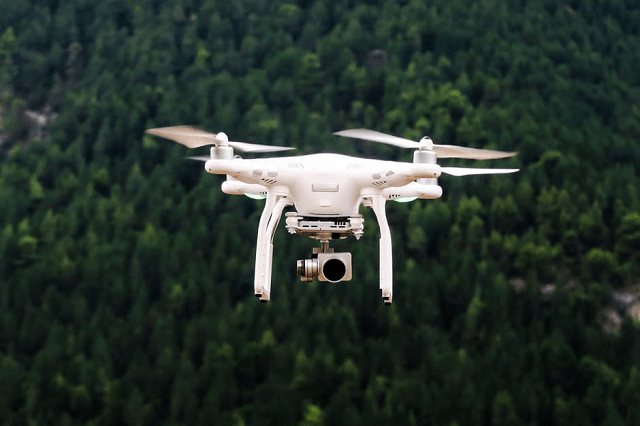
Popular Science reported Mar. 8 that an unknown YouTuber called Tollymaster recently added a video of a moderated DJI Phantom 2 UAV which they asserted to have reached to upwards of 11,000 ft.—or 2 miles—into the sky. DJI drones possess software ingrained that halts them from flying through confined airspace (such as airports), or above 1,500 feet, showing the pilot evidently crashed into the device’s software and took over the default settings. The US Federal Aviation Administration, for reference, limits drones flying above 400 feet, though it’s obscure where this video was shot.
While the video that they filmed was pretty sensational, it’s quite irresponsible to have done this in the first place, seeing as the drone is straying out of the pilot’s line of glimpse (which is another requirement of the FAA), and into a territory that aircraft could be setting out or landing, or helicopters might be working in. That’s not to reveal that if the battery had died—or the pilot had lost the capability to pilot the machine at that height, the upshot drone-shaped meteorite would’ve been a debacle for anyone in the strike zone.
Tollymaster brought down the video from YouTube after a barrage of comments from other drone fanciers reprimanded their perilous flying. However, if you want to watch the Phantom’s flight in full, a Dutch blog called DroneWatch snared a replica of the video before it was taken down.
It’s improbable that this sort of action would be very well allowed by regulatory bodies like the FAA, as it appears people are already sallying drones into pitches and presidential villas, debarring firefighting works , and attaching weapons to them for mere play. While it appears some individuals are striving assiduously on constructing drones to deliver drugs to those in need and save lives in out-of-the-way areas, remaking these machines to allow them to gain access to airspace this high won’t assist convince people that drones are more helpful than hazardous.
Long time and expert pilot has cited lack of training, oversight, and drone regulations enforcement as the things that worry him.
Ron Garnett, who has been a pilot for 40 years, often flies his two-seater ultralight plane to the southeast of Saskatoon. According to him, he says drones are more difficult to see midair than seagulls and other birds and it might happen someday that he or another pilot would crash into a drone in the sky.
Drones In the Airspace Make Pilot Nervous
Scroll down for video
Geograph
“They make me nervous primarily because they’re invisible to radar,” Garnett said. “They’re just like loose cannons out there.”
Garnett has had a pilot’s license for 40 years and the ultralight aircraft that he flies is used for commercial aerial photography.
“I’m watching a lot more carefully what else is in the air near me, but there’s very little chance of seeing them,” he said, as he prepared to take off from Corman Air Park, southeast of Saskatoon. “I could see a seagull easier than I could see a drone.”
Transport Canada Rules Aren’t Enforced
Guidelines have been established by Transport Canada for the use of unmanned aerial vehicles (UAVs) for recreational use. More detailed permit criteria for UAVs used for commercial uses and those with weight above 35 kilograms are also laid out.
Any distance less than nine kilometers within the vicinity of any airport or controlled airspace is restricted for drones to fly. Exemptions are, however, allowed for operators of commercial UAV operators who successfully apply for a Special Flight Operations Certificate.
Users for recreational purposes are also asked to keep their aircraft within view and also fly in good weather. They are also asked to avoid populated areas and moving vehicles and to also keep the aircraft below 90 meters from ground level. Pilot Ron Garnett says most unmanned aerial vehicles do not show up on radar and are difficult to spot, and this makes him nervous as he doesn’t know where a drone will show up in the airspace he is flying in.
What worries Garnett is that these rules aren’t being enforced.
“Pilots are all following the rules, and we spend a lot of money on training and that sort of thing.” Garnett said. “Drones are not.”
Drones Are Used to Survey New Bridge Site
Womenalia
Graham Commuter Partners makes use of drones to survey its construction site for the North Commuter Parkway Bridge, and while this area falls into Transport Canada’s nine-kilometer exemption zone around the Saskatoon airport, the company still uses drones in the area and Garnett is concerned about it.
He mentioned its proximity to one of the main runways and he also said the new bridge is directly under a traffic circuit smaller planes make use of during landings and takeoffs.
Dan Willem, project manager of Saskatoon, has gotten permission from Transport Canada to fly its UAV, and so far, it has been doing so safely without hassles.
In an e-mail to CBC, Willem said, “The UAV operator must call the Saskatoon airport control tower no less than 15 minutes prior to launching the UAV and immediately after the UAV has landed.”
Absence of Minimum Operator Qualification Standards
In the case of Special Flight Operations Certificate for UAVS above 35 kilograms, Transport Canada’s regulations state, “The UAV operator remains responsible for ensuring that their personnel have reached a satisfactory level of knowledge, experience, and skill.”
Garnett says, “There’s no training, there’s no licence required, there’s no medicals for the people who operate them.”
He also wants to see the establishment of a registration system to track the owners of drones that fly away or crash.
“If a drone causes some damage and they do recover it, Transport Canada and the police have no way of determining who owns the drone,” Garnett said. “It’s like the wild west out there.”

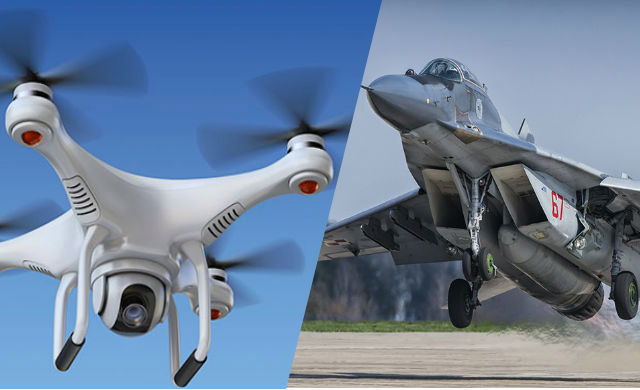 Among the public disturbance of drones was a near-collision, which involved an Air Force fighter jet last month over the Grand Bay Bombing Range in Georgia, in which a drone flew over residential district located on the outskirt of Philadelphia closely to the refueling tanker of an Air Force and caused an evasive action being taken by the plane.
The FAA’s new registration policy mandatory is already effective, with details that include the following:
The regulations stated that any toy drones owners that weigh more than half a pound must register their aircraft with the government and label it with a serial number. The FAA requires the recreational drone’s operators to fly their machines no higher than 400 feet and must be kept away from the airports at distance of at least 5 miles.
Reports have shown that difficulties encountered in regulating the use of the little machines called drone are very alarming. More Americans have been drawn to the hobby of drones, hence the decrease in its prices. There are high indications that many more drones would be given at Christmas. An official of FAA earlier this year predicted that Americans would purchase a million new drones in 2015.
Drone registration alone will not be enough for safety delivery in the skies. Because no one supports a mid-air disaster to arouse action, it’s high time for federal regulators, commercial aviation, and the military to collaborate with the drone industry on means to keep little fliers from being a threat to jets and planes in the skies.
Apart from the registration of drones of various sizes, the FAA must make sure that the drone operators follow and abide by the rules and regulations laid down by the government. Anyone found violating the rules must be severely sanctioned accordingly.
Quarterly seminars should be organized by the federal regulators for drone manufacturers, individuals, and the commercial drone operators to create awareness and also warn them of the dangers their machines pose to the aviation industry and the populace in general.
The drone big users, manufacturers, and all stakeholders in the industry must be monitored by the FAA and all other government agencies. A law must be passed by the federal legislation to guide the use of drones and also to identify some selected areas where drones would be used.
To this end, military must also be used to enforce the law where and when necessary. The FAA and other government agencies involved will play a major role to make sure the law is strictly followed and adhered to by both the manufacturers and individual user respectively. Any individual or commercial drone operators that go contrary will lose his machine and will be prosecuted in the law court.
Among the public disturbance of drones was a near-collision, which involved an Air Force fighter jet last month over the Grand Bay Bombing Range in Georgia, in which a drone flew over residential district located on the outskirt of Philadelphia closely to the refueling tanker of an Air Force and caused an evasive action being taken by the plane.
The FAA’s new registration policy mandatory is already effective, with details that include the following:
The regulations stated that any toy drones owners that weigh more than half a pound must register their aircraft with the government and label it with a serial number. The FAA requires the recreational drone’s operators to fly their machines no higher than 400 feet and must be kept away from the airports at distance of at least 5 miles.
Reports have shown that difficulties encountered in regulating the use of the little machines called drone are very alarming. More Americans have been drawn to the hobby of drones, hence the decrease in its prices. There are high indications that many more drones would be given at Christmas. An official of FAA earlier this year predicted that Americans would purchase a million new drones in 2015.
Drone registration alone will not be enough for safety delivery in the skies. Because no one supports a mid-air disaster to arouse action, it’s high time for federal regulators, commercial aviation, and the military to collaborate with the drone industry on means to keep little fliers from being a threat to jets and planes in the skies.
Apart from the registration of drones of various sizes, the FAA must make sure that the drone operators follow and abide by the rules and regulations laid down by the government. Anyone found violating the rules must be severely sanctioned accordingly.
Quarterly seminars should be organized by the federal regulators for drone manufacturers, individuals, and the commercial drone operators to create awareness and also warn them of the dangers their machines pose to the aviation industry and the populace in general.
The drone big users, manufacturers, and all stakeholders in the industry must be monitored by the FAA and all other government agencies. A law must be passed by the federal legislation to guide the use of drones and also to identify some selected areas where drones would be used.
To this end, military must also be used to enforce the law where and when necessary. The FAA and other government agencies involved will play a major role to make sure the law is strictly followed and adhered to by both the manufacturers and individual user respectively. Any individual or commercial drone operators that go contrary will lose his machine and will be prosecuted in the law court.
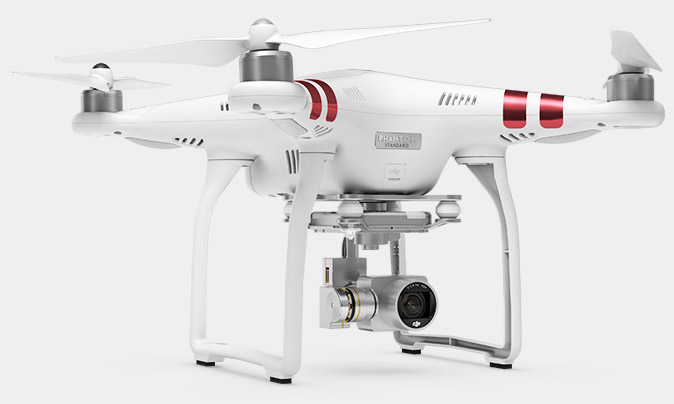
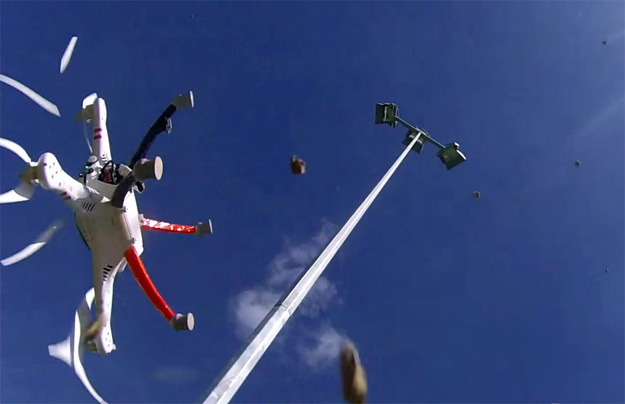


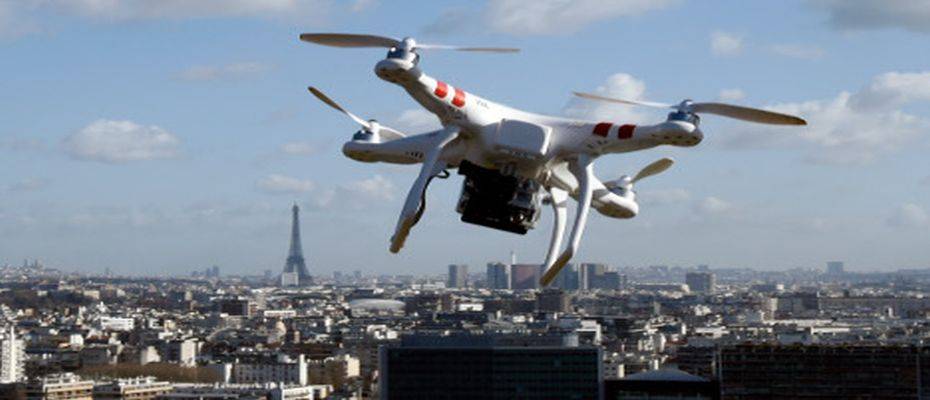
 Popular Science reported Mar. 8 that an unknown YouTuber called Tollymaster recently added a video of a moderated DJI Phantom 2 UAV which they asserted to have reached to upwards of 11,000 ft.—or 2 miles—into the sky. DJI drones possess software ingrained that halts them from flying through confined airspace (such as airports), or above 1,500 feet, showing the pilot evidently crashed into the device’s software and took over the default settings. The US Federal Aviation Administration, for reference, limits drones flying above 400 feet, though it’s obscure where this video was shot.
While the video that they filmed was pretty sensational, it’s quite irresponsible to have done this in the first place, seeing as the drone is straying out of the pilot’s line of glimpse (which is another requirement of the FAA), and into a territory that aircraft could be setting out or landing, or helicopters might be working in. That’s not to reveal that if the battery had died—or the pilot had lost the capability to pilot the machine at that height, the upshot drone-shaped meteorite would’ve been a debacle for anyone in the strike zone.
Tollymaster brought down the video from YouTube after a barrage of comments from other drone fanciers reprimanded their perilous flying. However, if you want to watch the Phantom’s flight in full, a
Popular Science reported Mar. 8 that an unknown YouTuber called Tollymaster recently added a video of a moderated DJI Phantom 2 UAV which they asserted to have reached to upwards of 11,000 ft.—or 2 miles—into the sky. DJI drones possess software ingrained that halts them from flying through confined airspace (such as airports), or above 1,500 feet, showing the pilot evidently crashed into the device’s software and took over the default settings. The US Federal Aviation Administration, for reference, limits drones flying above 400 feet, though it’s obscure where this video was shot.
While the video that they filmed was pretty sensational, it’s quite irresponsible to have done this in the first place, seeing as the drone is straying out of the pilot’s line of glimpse (which is another requirement of the FAA), and into a territory that aircraft could be setting out or landing, or helicopters might be working in. That’s not to reveal that if the battery had died—or the pilot had lost the capability to pilot the machine at that height, the upshot drone-shaped meteorite would’ve been a debacle for anyone in the strike zone.
Tollymaster brought down the video from YouTube after a barrage of comments from other drone fanciers reprimanded their perilous flying. However, if you want to watch the Phantom’s flight in full, a 

 Excellentdronesgpstracker